Dans les yeux d’Elsa is already 6 years old, Launched in March 2020, the page was launched with its very first interview on 25 March 2020 with French painter Christine Safa. To mark the page’s anniversary, I am delighted to share an exclusive interview with the artist.
This new conversation aims to look back on this period, examining both the evolution of the artist’s career and pictorial work.
In this exclusive interview, Christine Safa looks back in particular on 2020 and the past six years, which have been marked notably by her representation by the Parisian gallery, Galerie Lelong and New York gallery, BORTOMAMI.

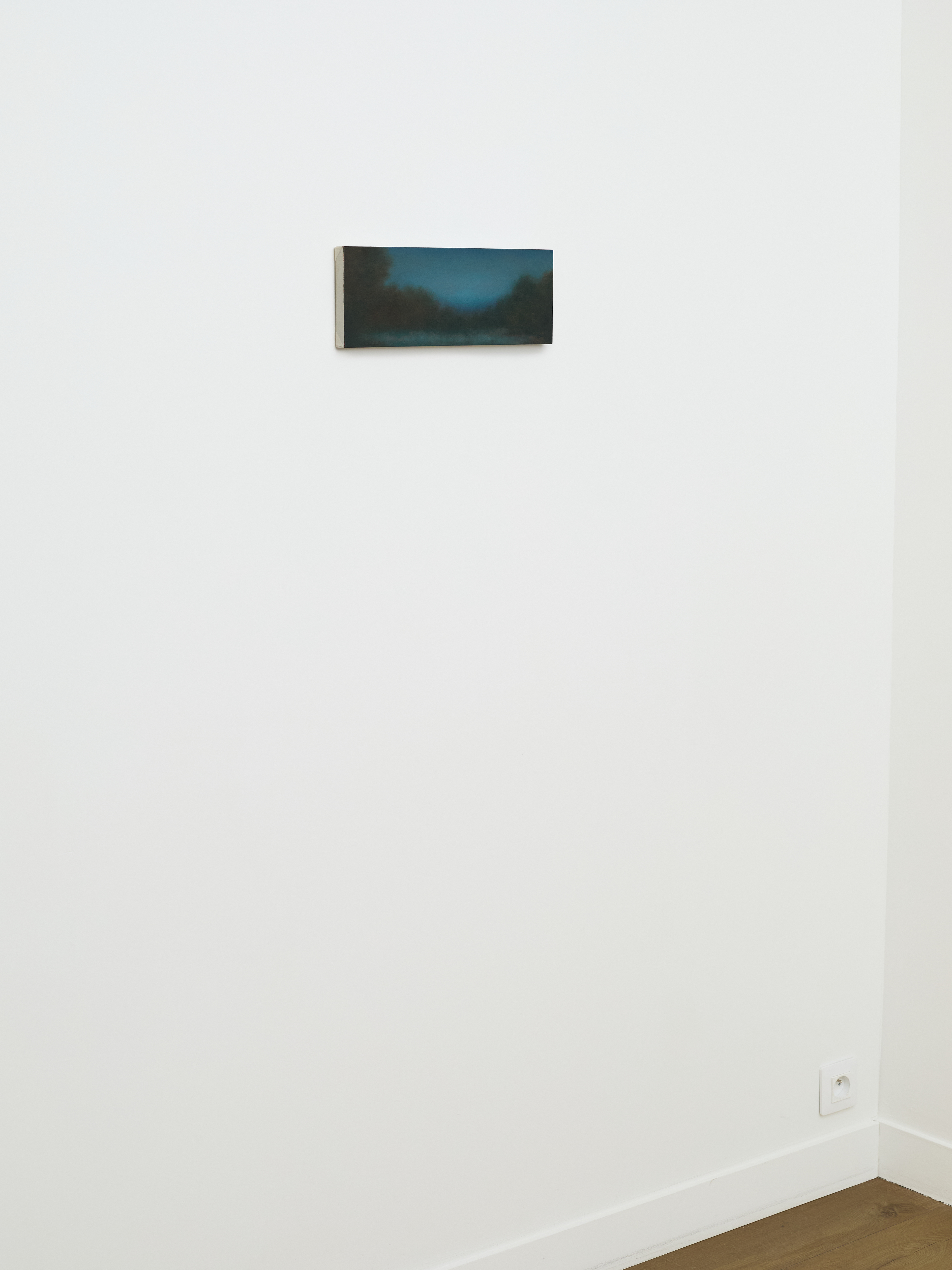
Christine Safa, Horizon (Montagne bleue), 2025, oil on canvas,  24x19 cm
Christine Safa, Horizon (Montagne bleue), 2025, oil on canvas, 24x19 cm


I realise more and more that the moment the brush touches the canvas is violent, rapid, abrupt at times. The beginning is like a block of earth, then, as I keep painting, the figures emerge.​​​​​​​ "

Christine Safa

Elsa Meunier- Christine, you were the very first artist to take part in Dans les yeux D’Elsa. It was on March 25th, 2020. I wanted to begin this new conversation by asking you whether, for you, 2020 had been a significant, defining year in your career and in your painting practice? 
Christine Safa- Lockdown made me realise the need for calm and solitude, which would be conducive to deeper introspection, allowing me to be, in a way, more open, whole, closer to the truth, and in the ideal conditions for painting. That year, I was fortunate enough to meet Blanche Goudchaux, who became a friend, a guardian angel and who, a few years later, enabled me to join the Galerie Lelong. That same year, thanks to Elie de Gourcuff and Victoire de Pourtalès, I had the honour of taking part in an exhibition at Lévy Gorvy. 
In 2020, there was also the explosion at the port of Beirut, which was a deeply shocking event that brought a sense of urgency to my painting—an ode to pure colour, simplified forms, and quicker, more direct brushstrokes. I no longer had time to hesitate; I had to release the pain. And thanks to the works on paper I created, I was able to make donations to charities.

Elsa Meunier- Christine, tu as été la toute première artiste à participer à Dans les yeux d’Elsa. C’était le 25 mars 2020. J’avais alors envie de commencer ce nouvel échange, en te demandant si pour toi l’année 2020 avait-t-elle été marquante, déterminante dans ta carrière et dans ta pratique picturale ? 
Christine Safa- Le confinement m’a permis de me rendre compte du besoin de calme et d’isolement qui serait propice à une plus profonde introspection, qui me permettrait d’être d’une certaine manière plus disponible, entière, proche d’une vérité et dans les conditions idéales pour peindre. Cette année-là, j’ai eu la chance de rencontrer Blanche Goudchaux, qui est devenue une amie, un ange gardien et, qui, quelques années plus tard, m’a permis de rentrer chez Lelong. Cette meme année, grâce à Elie de Gourcuff et Victoire de Pourtalès, j’ai eu l’honneur de participer à une exposition chez Lévy Gorvy. 
En 2020,  il y a aussi eu l’explosion au port de Beyrouth qui a été un événement bouleversant, qui a apporté une certaine urgence dans ma peinture, un ode à la couleur pure, aux formes simplifiées, aux gestes plus rapides, directs, je n’avais plus le temps d’hésiter, il fallait que je sorte une douleur. Et grâce aux œuvres sur papier que j’ai faites, j’ai pu faire des dons à des associations.

Elsa Meunier- So six years have passed, and a lot has changed for you since then. Our conversation took place just after you exhibited at Tajan Contemporary in Paris. Looking back, can you tell us what has happened in your career over the past few years and tell us about your upcoming projects? 

Christine Safa- I’ve been lucky enough to exhibit in Milan at the ICA, and in New York thanks to the Bortolami Gallery, with whom I also work. And I had my first institutional exhibition in France at the Frac Auvergne. I loved being able to interact with visitors by spending time there during the exhibition, and also seeing all the educational activities that were organised. I’ve also had two solo exhibitions at Galerie Lelong, in Paris.
And right now, I’m preparing an exhibition for New York in September 2026. I’m also taking part in a group exhibition in Venice on the theme of Waves during the Biennale – a dream come true – and I hope to have other projects in Italy.

Elsa Meunier- 6 ans se sont donc écoulés, les choses ont beaucoup évolué pour toi depuis. Notre échange avait été réalisé juste après que tu aies exposé chez Tajan contemporary, à Paris. Peux-tu nous dire ce qui s’est passé rétrospectivement dans ta carrière pendant ces années-là et nous parler de tes prochains projets ? 
Christine Safa- J’ai eu la chance d’exposer à Milan à l’ICA, à New York grâce à la galerie Bortolami avec laquelle je travaille aussi. Et j’ai eu ma première exposition en institution en France au Frac Auvergne.J’ai adoré pouvoir interagir avec les visiteurs en passant du temps sur place pendant l’exposition et aussi voir toute la médiation mise place. J’ai également faist deux expositions personnelles à la galerie Lelong, à Paris.
Et là, je prépare une exposition pour New York en Septembre 2026. Je participe à une exposition collective à Venise autour des Vagues pendant la biennale, un rêve - et j’espère d’autres projets en Italie. 

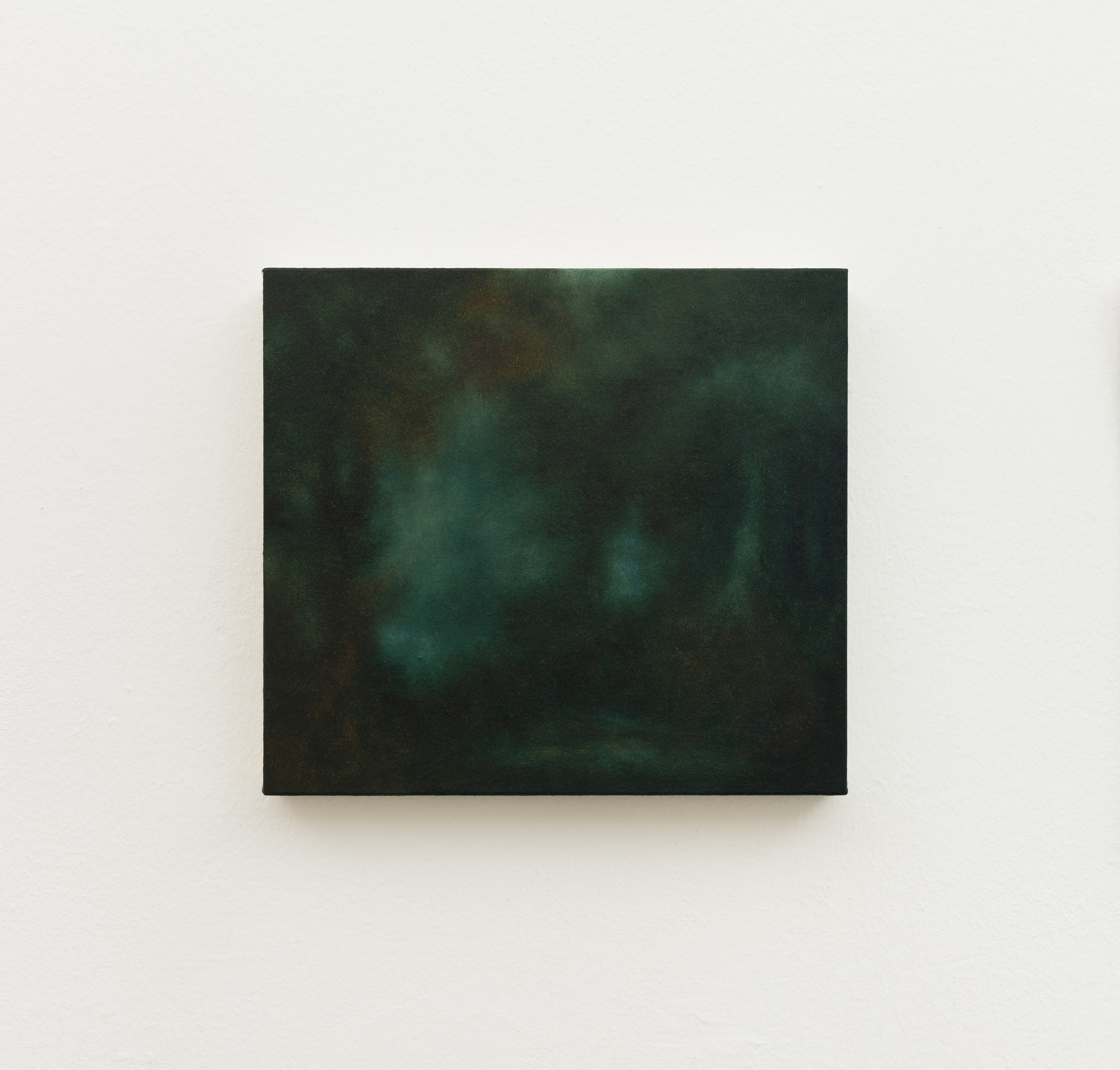
Christine Safa, Demi-soleil, 2025, oil on canvas, 33 x 22 cm

Elsa Meunier- You are one of those artists whose work I have been able to follow closely, ever since your time at the École des Beaux-Arts in Paris. And I have noticed that, over the years, it is a pleasure to rediscover the motifs and subjects that are dear to you and which today make your work instantly recognisable: depictions of the sea and the sky, of mountains, of your loved one… What I have particularly noticed over the years is the evolution of your colours. They used to be very flamboyant (reds, oranges), often set against a bright, sunny blue, and applied in broad, flat areas. Today, the colours you choose seem more varied and, above all, applied in a succession of thin layers of colours that contrast more strongly with one another, creating a colourful, luminous and particularly vibrant texture. Can you tell us about the evolution of your motifs and colours? 

Christine Safa- I think I’ve come to accept that my heart has settled here too, and that I was no longer merely living in a Mediterranean fantasy. Everything coexists.


Elsa Meunier- Tu fais partie des artistes pour lesquels j’ai vraiment pu suivre l’évolution du travail et ce, depuis l’Ecole des Beaux-arts de Paris. Et j’ai constaté qu’au fil des années, on se plait à retrouver les motifs et sujets qui te sont chers et qui aujourd’hui permettent d’identifier directement ton travail : la représentation de la mer et du ciel, de la montagne, de l’être aimé.. Ce que j’ai particulièrement remarqué au fil de ces années, c’est l’évolution de tes couleurs. Elles étaient très flamboyantes (rouge, oranges) souvent placées en contraste avec un bleu vif, solaire, et appliquées en larges aplats. Aujourd’hui, les couleurs choisies semblent  davantage multiples et surtout appliquées par succession de fines couches de couleurs plus contrastées entre elles créant une trame colorée, lumineuse et particulièrement vibrante. Peux-tu nous parler de l’évolution de la représentation de tes motifs et de tes couleurs? 
Christine Safa- Je crois que j’ai accepté que mon cœur s’est établi ici aussi, et que je n’étais plus que dans un fantasme méditerranéen. Tout cohabite.

Elsa Meunier- Your motifs—be they sunflowers, a sun, a depiction of your dog, a figure emerging from the sea, or even portraits with etched features—all seem to emerge, gradually rising from the surface of the canvas yet never fully detaching themselves from it. I know that this approach to representation allows you to give more space to the sensations you experience, like fragments of what remains in your memory, which the painting seeks to bring to life.
I would therefore like to ask you whether you paint one work at a time, and whether a single memory can inspire the creation of a series of paintings exploring it in various ways?

Christine Safa- A single memory, a single mental image, can give rise to several paintings, so that I do not limit myself to just one way of rendering it on the canvas. It is as though I were trying to capture all the possible ways of representing that emotion or lingering sensation. Between the moment I experienced and now, there have been other similar moments: journeys, travels, landscapes rediscovered, seen again. The canvas welcomes the initial intuition; sometimes it remains throughout the painting process, and sometimes it becomes something entirely different. Having several paintings at the same time allows me not to worry about the final result and to be less in a hurry with a painting. Sometimes, too, an emotion or a subject is so present to me that I need to capture it on several surfaces to be sure that at least one canvas will remind me of something. And often, I enjoy myself more and feel freer that way. It’s important to rediscover joy in painting, as it’s often difficult. 
Elsa Meunier- Tes motifs, qu’il s’agisse de tournesols, d’un soleil, de la représentation de ton chien, d’un personnage émergeant de la mer ou même de portraits aux traits incisés, tous semblent émerger, surgir progressivement de la matière mais jamais s’en detacher pleinement. Je sais que ce parti-pris de représentation te permet de laisser davantage place aux sensations éprouvées tels des fragments de ce qui te reste en mémoire et dont la peinture chercherait à matérialiser.
J'aimerais alors te demander si tu peints une oeuvre à la fois et si un même souvenir peut-il impulser la création d'un ensemble de peintures l'explorant de diverse façon? 

Christine Safa- Un même souvenir, une même image mentale, peut donner plusieurs peintures de sorte que je ne me fixe pas seulement à une seule façon de la poser sur la surface de la toile. Comme si j’essayais de contenter toutes les possibilités de représentation de cette émotion ou chose qui reste. Entre le moment vécu, il y a eu d’autres moments similaires : des voyages, des déplacements, des paysages redécouverts, vus à nouveau. La toile accueille la première intuition, parfois elle reste tout au long du cheminement de la peinture et parfois elle devient totalement autre chose. Le fait d’avoir plusieurs peintures en même temps me permet de ne pas me préoccuper du résultat final et de moins presser une peinture. Parfois aussi l’émotion, un sujet, m’est si présent que j’ai besoin de le figer sur plusieurs surfaces pour être sure que déjà au moins une toile m’évoquera quelque chose. Puis souvent, je m’amuse plus et suis plus libre ainsi. C’est important de retrouver de la joie en peignant car souvent c’est difficile. 

Christine Safa, Nathan et Vigne (Etreinte), 2025, oil on canvas, 73x54 cm
Christine Safa, Nathan (Le Sporting, bleu azurite), 2025, oil on canvas, 195x130 cm

Elsa Meunier- Recently, you have introduced a new motif: that of the house. A house with a triangular roof that is reminiscent of a motif you have often painted: that of the triangular mountain. Whilst colour seems central to your painting, I feel that geometry and spatial construction through colour are just as important. We can see the horizon line creating a two-part composition between the sky and the sea, the triangular form of the mountain or the house’s roof, and the circle of the sun lending a certain verticality to the work. Sometimes your compositions simply give way to spaces of colour, thus suggesting the expanse of the sky, the boundary of the horizon and the expanse of the sea or a landscape. This is something we see even more directly in your watercolour work on paper, which really reveals the construction of your works through colour. Can you describe your creative process to us?

Christine Safa- ​​​​​​​It’s something—like so many things—that I haven’t quite put into words yet. Just as I feel the need to look at sculptures, I find myself increasingly drawn to these geometric shapes. I never thought I’d paint architecture. But since I’ve been living surrounded by houses, I feel that the way I look at the perspectives in Italian paintings—the rectangles and coloured squares against which the figures are set—has allowed me to see the houses around me in this way. It’s even stronger when I’m walking around Italy, of course. The squares and rectangles of the windows are arranged in an almost anarchic way at times. It’s the same sensation I feel when faced with juxtaposed colours; it’s a sort of fulfilment. ‘This shape of house seems perfect to me,’ I sometimes tell myself. I think of Paul Klee and Morandi, of course. It’s a sensation I often find myself experiencing when looking at Suzan Frecon or Agnes Martin.

There is a house in Beirut that had already evoked this feeling in me: a triangle set upon a square, and a sort of circle—an oculus—in relief between the roof and the square of the house. That house was painted pink. In Palaiseau, there is a similar house too. In Italy, this sense of near-perfect forms amazes me even more. 
The watercolours are not preparatory studies for oil paintings on canvas. They are, of course, more direct moments, but with time, I feel I am managing to achieve that same sense of nonchalance on certain canvases. 
Very recently, the return of war to Lebanon has given me a renewed sense of urgency. I began painting in this state – disoriented, sad, anxious and on edge – I call them ‘war paintings’; a new motif has emerged: that of the plane. The one that flies past every 10 minutes in the sky above Palaiseau. The one that could land in Beirut. The one that has taken me so many times from Paris to Beirut. A journey that is always deeply moving. The journey from Beirut to Paris, too.
Flying can be quite a shock, to move from one landscape to another. From one life to another. From one home to another. 
Sometimes I worry that my painting is too well-behaved, but then the war returns and turns everything upside down. Even though, of course, I’m in a completely privileged position, being far away, my heart, my family and my memories ‘over there’ reawaken a sense of urgency within me, along with inherited wounds and emotions.
I realise more and more that the moment the brush touches the canvas is violent, rapid, abrupt at times. The beginning is like a block of earth, then, as I keep painting, the figures emerge.

Elsa Meunier- Récemment, tu as intégré un nouveau motif : celui de la maison. Une maison au toit triangle qui n’est pas sans rappeler le motif que tu as souvent peint : celui de la montagne triangle. Si la couleur semble centrale dans ton travail de peinture, j’ai le sentiment que la géométrie et la construction spatiale par la couleur l’est tout autant. On peut observer la ligne de l’horizon créant une oeuvre bipartite entre la part du ciel et la part de la mer, le module du triangle pour la montagne ou celui du toit de la maison, le cercle du soleil venant donner une certaine verticalité à l’oeuvre.. Parfois tes compositions laissent place simplement aux espaces-couleurs suggérant ainsi l'espace du ciel, la délimitation de l'horizon et l'espace de la mer ou d'un paysage.  C’est quelque chose qu’on observe encore plus directement dans ton travail d’aquarelle sur papier qui révèle vraiment la construction de tes oeuvres par la couleur.Peux-tu nous décrire ton processus créatif?
Christine Safa- C’est quelque chose, comme beaucoup de choses, sur lequel je ne mets pas encore de mots. Comme mon besoin de regarder des sculptures, j’ai ce même attrait pour ces formes géométriques de plus en plus. Je n'aurais jamais pensé que je peindrais des architectures. Mais depuis que je vis entourée de maisons, je sens que le regard que je pose sur les perspectives dans les peintures italiennes, les rectangles, carrés colorés sur lesquels les figures se posent, m’ont permis de voir les maisons qui m’entourent de cette manière. C’est encore plus fort quand je me promène en Italie, évidemment. Les carrés et rectangles des fenêtres sont disposés d’une manière presque anarchique parfois. C’est la même sensation que j’éprouve face à des couleurs juxtaposées, c’est une sorte de plénitude, « cette forme de maison me semble parfaite » je me dis parfois.  Je pense à Paul Klee, Morandi, bien sûr. Une sensation que je retrouve devant Suzan Frecon ou Agnes Martin, souvent.
Il y a une maison à Beyrouth qui m’avait déjà évoqué cette sensation, un triangle posé sur un carré, et une sorte de cercle, oculus, en relief entre le toit et le carré de la maison. Cette maison avait une teinte rose. À Palaiseau, il y a une maison similaire aussi. En Italie cette sensation de quasi perfection des formes m’émerveille encore plus. 
Les aquarelles ne sont pas préparatoires à des huiles sur toile. Ce sont des moments bien sûr plus directs, mais, à force, je sens que j’arrive à avoir cette même quasi nonchalance sur certaines toiles. 
Très récemment, le retour de la guerre au Liban m’a redonné un élan d’urgence. J’ai commencé des peintures dans cet état, déboussolée, triste, angoissée et énervée - je les appelle des peintures de guerre, un nouveau motif arrive, celui de l’avion. Celui qui passe toutes les 10 minutes dans le ciel de Palaiseau. Celui qui peut atterrir à Beyrouth. Celui qui m’a amenée tant de fois de Paris à Beyrouth. Un trajet toujours bouleversant. Celui de Beyrouth à Paris aussi. 
C’est violent de prendre l’avion, de passer d’un paysage à un autre. D’une vie à une autre. D’un chez soi à un autre. 
Parfois, j’ai peur que ma peinture soit trop sage, puis la guerre revient, et remue tout. Même si bien sûr j’ai une position totalement privilégiée d’être loin avec mon cœur, ma famille, mes souvenirs « là-bas », réactivent en moi une urgence, des blessures et émotions héritées.
Je me rends compte de plus en plus que le moment où le pinceau touche la toile est violent, rapide brusque parfois. Le début est comme un bloc de terre, puis à force de peindre les figures surgissent.

Christine Safa, Maison, 2025, oil on canvas, 35x32 cm
Christine Safa, Mer noire, montagne bleue, ciel rouge, 2025, oil on canvas
Christine Safa, Horizon (ocre rouge malachite), 2025, oil on canvas, 55x33 cm
Christine Safa, Un matin (le silence, la maison), 2025, oil on canvas, 220x250 cm
Back to Top